2026.02.26
Cylindrical lithium batteries are one of the most mature and widely used types of rechargeable lithium-ion cells. Thanks to their standardized sizes, stable performance, and cost efficiency, they are extensively applied in consumer electronics, energy storage systems, and electric mobility solutions.
A cylindrical lithium battery is a round-shaped lithium-ion cell enclosed in a rigid metal or polymer casing. These batteries are classified according to different cathode material systems, including:
Lithium Iron Phosphate (LiFePO₄)
Lithium Cobalt Oxide (LiCoO₂)
Lithium Manganese Oxide (LiMn₂O₄)
Cobalt-Manganese Hybrid
Ternary Lithium (NMC – Nickel Cobalt Manganese)
The casing is typically made of nickel-plated steel (most common) or polymer materials. Among these systems, steel-cased lithium iron phosphate batteries are widely used due to their safety, long cycle life, and stable performance.
High capacity and high output voltage
Stable charge–discharge performance
Strong high-current discharge capability
Wide operating temperature range
Good environmental compatibility
They are commonly used in:
Solar lighting systems
Lawn lights
Backup power supplies
Power tools
Toy models
A typical cylindrical lithium battery consists of:
Steel casing (usually the negative electrode)
Cap (positive electrode)
Positive electrode material (cathode)
Negative electrode material (anode)
Separator
Electrolyte
PTC element (overcurrent protection)
Gasket
Safety valve
The robust cylindrical shell provides strong pressure resistance and enhances safety during operation.
Compared with pouch and prismatic batteries, cylindrical lithium batteries offer several advantages:
They have the longest development history and the highest degree of standardization in the lithium battery industry.
Mature automated production lines
High product yield
Reduced PACK assembly cost
The cylindrical shape provides a larger specific surface area, improving thermal performance.
High pressure resistance
No swelling issues like pouch cells
Fully sealed structure with minimal maintenance
Different cathode materials determine battery performance, cost, safety, and application fields.
| Material | Voltage (V) | Cycle Life | Cost | Safety | Main Applications |
|---|---|---|---|---|---|
| Lithium Cobalt Oxide (LiCoO₂) | 3.7V | ≥500 | High | Poor | Small electronics |
| Ternary Lithium (NMC) | 3.5V | ≥500 | High | Better | Small power batteries |
| Lithium Manganese Oxide (LiMn₂O₄) | 3.8V | ≥300 | Low | Good | Power tools |
| Lithium Iron Phosphate (LiFePO₄) | 3.2V | ≥2000 | Low | Excellent | Power batteries & large storage |
LiCoO₂: High energy density but expensive and lower safety.
NMC: Balanced performance and widely used in EVs.
LiMn₂O₄: Lower cost but lower energy density.
LiFePO₄: Exceptional safety and long lifespan, ideal for large-scale energy storage.
The anode (negative electrode) materials include:
Artificial graphite
Natural graphite
Mesophase carbon microspheres
Petroleum coke
Carbon fiber
These are currently the most widely commercialized anode materials.
Silicon-based alloys
Tin-based materials
Nano-materials (carbon nanotubes, nano-oxides)
Alloy-based composites
Although promising, many advanced materials are still under development and not yet widely commercialized.
Cylindrical lithium-ion cells are typically represented by five digits:
First two digits: Diameter (mm)
Next two digits: Height (mm)
Last digit: Indicates cylindrical shape
The 18650 battery measures 18mm × 65mm.
It offers energy density close to 170 Wh/kg and is one of the most mature lithium battery models.
Applications:
Laptops
Flashlights
Portable electronics
Small energy storage systems (~10 kWh scale)
The 21700 battery measures 21mm × 70mm.
With a larger size, it provides higher volumetric energy density than 18650 cells.
Applications:
Electric vehicles
Power tools
Solar street lights
LED lighting
Digital devices
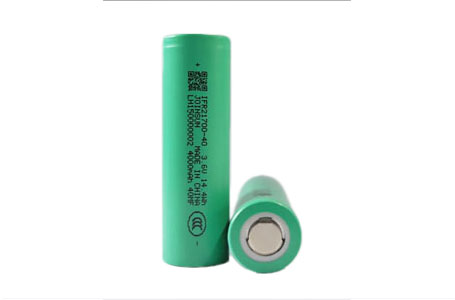
Other models include 10400, 14500, 16340, 26650, and 32650.
The cylindrical lithium battery pack market is experiencing rapid technological and industrial transformation.
Advancements in materials and battery chemistry are significantly increasing energy density. This enables:
Longer runtime for consumer electronics
Extended driving range for electric vehicles
New rapid charging solutions reduce charging time, improving convenience and accelerating adoption in EVs and portable electronics.
Manufacturers are investing in:
E-waste recycling technologies
Eco-friendly materials
Circular economy initiatives
These sustainability measures address environmental concerns and meet global regulatory requirements.
Growing demand from EVs and electronics industries has led to:
Expansion of manufacturing facilities
Large-scale automated production
Cost reduction through economies of scale
Advancements in Battery Management Systems (BMS) and smart monitoring technologies improve:
Safety
Performance optimization
User experience
Cylindrical lithium batteries remain a dominant force in the rechargeable battery market due to their mature manufacturing processes, standardized dimensions, cost efficiency, and strong safety performance. From small consumer electronics to electric vehicles and large-scale energy storage systems, their applications continue to expand.
With ongoing innovations in materials, energy density, charging technology, and sustainability, cylindrical lithium battery packs are set to play an even more critical role in the global transition toward electrification and clean energy solutions.Contact us for more.
Other News
2026.06.10

2026.06.03
2026.05.26
Related Products

5C High Rate Continuous Discharge 8C High Rate Non-Continuous Discharge Power Tools and Electric Garden Tools 21700 Lithium Cells CE, UL 1642, FCC, IEC 62619, CB, BIS, PSE, 3C (CCC)

High Discharge Rate
High Temperature Resistance
Excellent Cycle Performance
Fast Charging